

Traditional Jamaican jerk chicken seasoning is a dry blend of eight core spices built around ground allspice, dried thyme, and scotch bonnet heat. The ratio matters more than the ingredient list, get it wrong and the blend tastes flat or aggressively hot. Below is the authentic ratio, the substitute for hard-to-find scotch bonnet, and the exact tablespoon count for a pantry-ready batch.
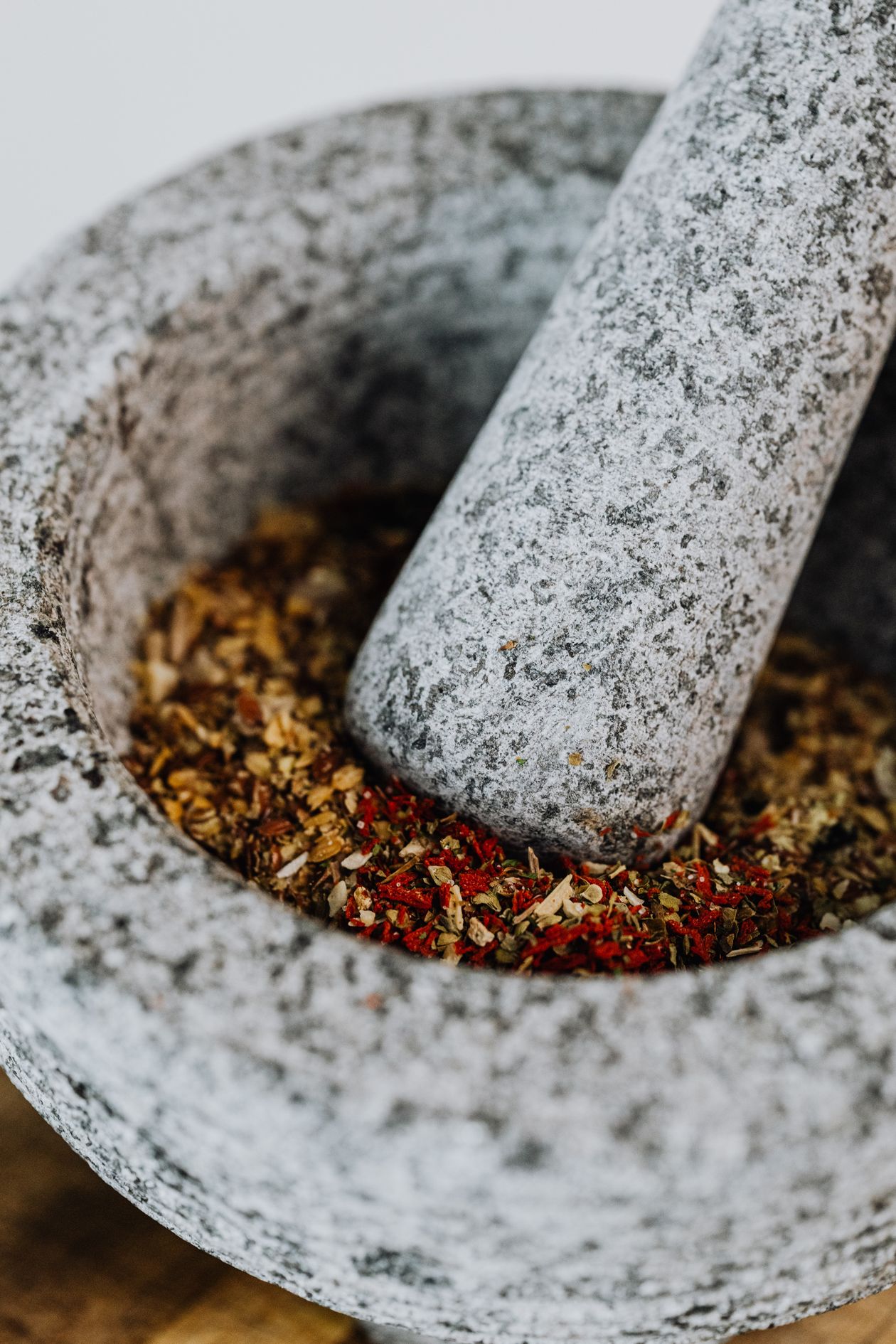
Traditional jerk chicken seasoning is a dry blend of 8 core spices in this ratio (per 6 tbsp batch, enough for 4-5 lb chicken): 2 tbsp ground allspice, 1 tbsp brown sugar, 1 tbsp salt, 2 tsp garlic powder, 2 tsp dried thyme, 1 tsp black pepper, 1 tsp cayenne (or ground dried scotch bonnet), and ½ tsp each of nutmeg and cinnamon. Use 1½ tablespoons of blend per pound of chicken. For a wet marinade, mix 3 tbsp blend with 2 tbsp olive oil, 2 tbsp soy sauce, and 2 tbsp lime juice.
Jump to a section
The traditional 8-spice ratios
This table shows the ratios for 3 use cases: a single meal (1 lb chicken), a family batch (4 lb), and a make-ahead pantry batch (about 6 tbsp of blend). Measure in level spoons, mounded spoons throw the ratio off enough to notice at the plate.
| Spice | 1 lb chicken | 4 lb chicken | Pantry batch (6 tbsp) |
|---|---|---|---|
| Ground allspice (pimento) | 1 tsp | 4 tsp | 2 tbsp |
| Brown sugar | ½ tsp | 2 tsp | 1 tbsp |
| Salt (kosher) | ½ tsp | 2 tsp | 1 tbsp |
| Garlic powder | ⅓ tsp | 1½ tsp | 2 tsp |
| Dried thyme | ⅓ tsp | 1½ tsp | 2 tsp |
| Cayenne (or dried scotch bonnet) | ⅙ tsp | ¾ tsp | 1 tsp |
| Black pepper | ⅙ tsp | ¾ tsp | 1 tsp |
| Ground nutmeg | pinch | ⅓ tsp | ½ tsp |
| Ground cinnamon | pinch | ⅓ tsp | ½ tsp |
Once you’ve made the blend, pair the seasoned chicken with traditional Caribbean sides and use it in our oven-baked jerk chicken recipe.
The 8 core spices explained
Every spice in the blend serves a specific role. Skip one and the profile collapses in a predictable way, which is why understanding each ingredient helps you adjust the blend to your palate without breaking it.
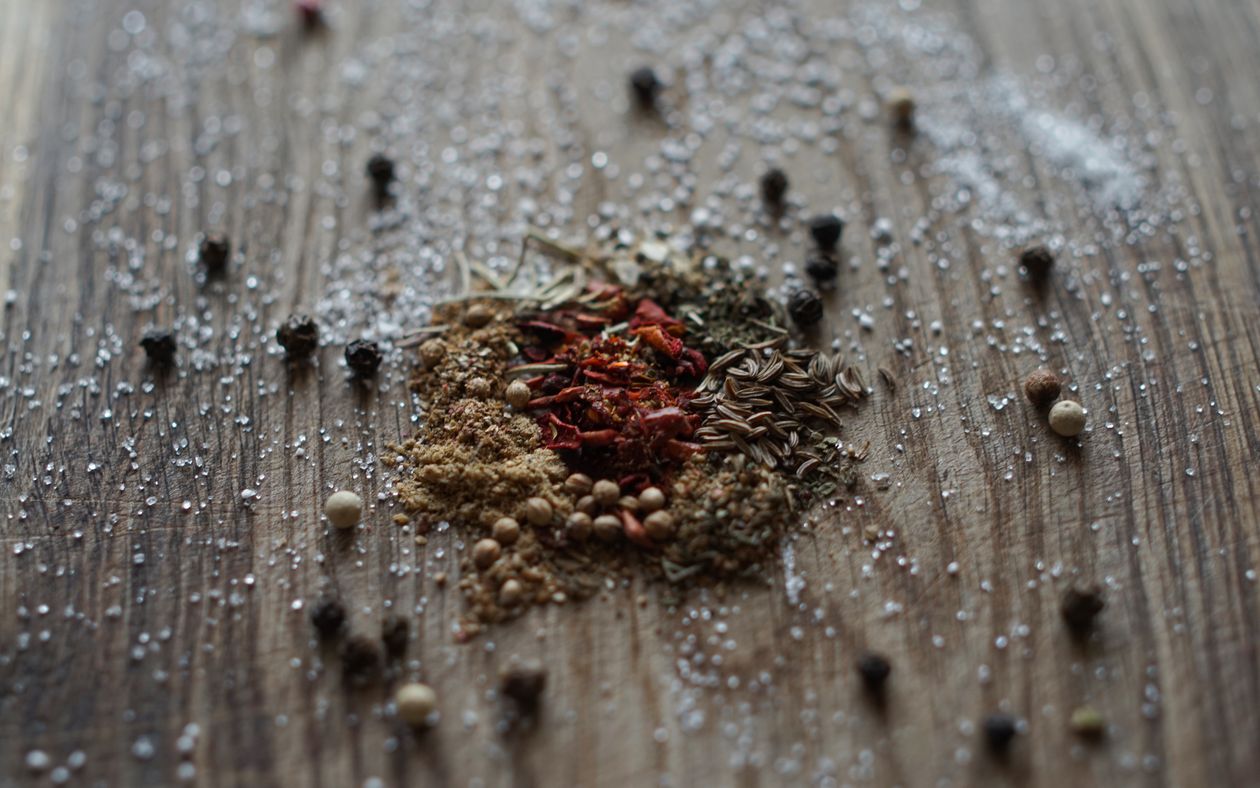
1. Allspice (pimento) — the defining note
Allspice is the single non-negotiable ingredient in Jamaican jerk. The dried berry of the Pimenta dioica tree grows almost exclusively in the Caribbean, and its flavor combines clove, cinnamon, and nutmeg in one berry. That’s why jerk seasoning without allspice tastes generic, no combination of other warm spices reproduces it. Ground allspice loses aroma fast, so grind fresh from whole berries if you can find them at Caribbean groceries or online spice merchants.
2. Brown sugar — the balance
Brown sugar exists in the blend to caramelize under grill heat and to soften the scotch bonnet’s aggressive front. Without it, the blend reads as one-dimensional heat, with it, you get the sweet-hot arc that defines jerk. Light or dark brown works, dark gives a slightly deeper molasses note. Coconut sugar is a legitimate substitute if you’re avoiding refined sugar, palm sugar less so because it’s drier.
3. Salt — the extractor
Kosher salt is the default because its coarser crystals distribute evenly through a dry rub without over-salting any single bite. If you use table salt, cut the volume by 30% because the finer grind packs tighter in a measuring spoon. Salt does more than season here, it pulls moisture from the chicken surface which helps the blend adhere and forms the crust that carries the char.
4. Garlic powder — the base aromatic
Garlic powder rather than fresh in a dry blend because fresh garlic doesn’t dry into a shelf-stable rub, it clumps and rots. Use the finely ground kind (labeled “garlic powder”), not granulated garlic which stays gritty on the chicken skin. For a wet marinade version, swap in 4 minced fresh garlic cloves per pantry batch.
5. Dried thyme — the herb
Thyme is the herb of Caribbean cooking, present in almost every Jamaican savory dish. In the blend it provides the green, resinous note that keeps the spice profile from tipping fully into warm-sweet territory. Dried whole-leaf thyme has more staying power than pre-ground thyme, which is closer to sawdust after 6 months on the shelf.
6. Cayenne (or dried scotch bonnet) — the heat
Traditional jerk uses fresh scotch bonnet peppers, but for a dry pantry blend you need either dried scotch bonnet powder (rare, sold at specialty Caribbean shops) or cayenne as the workaround. Cayenne brings the heat but misses the fruity note scotch bonnet gives, which is why a wet marinade with 1-2 fresh scotch bonnets outperforms a pure dry rub for authenticity.
7. Black pepper — the round-out
Freshly cracked black pepper (not pre-ground) adds a piney background heat that layers under the cayenne. In blind tests, tasters can’t identify which peppercorn variety is used, but they always notice when black pepper is missing, the blend goes flat at the finish.
8. Nutmeg + cinnamon — the warm spices
These two are the smaller-volume spices that echo the allspice from another angle. Nutmeg contributes a nutty warmth, cinnamon adds a sweet-woody depth. Use them light-handed, doubling either one throws the balance and makes the blend taste like pumpkin pie spice on chicken. Fresh-grated nutmeg is noticeably better than pre-ground.
Dry rub vs wet marinade
The same 8 spices can be used two ways. The dry rub is faster and shelf-stable, the wet marinade produces the deeper, jerkier flavor traditional Jamaican cooks prefer. Both are correct, use case decides which one you make.
Dry rub
Mix all 8 spices, store in a jar. Rub 1½ tbsp per pound of chicken 30 minutes before cooking. Best for weeknight chicken or when you don’t have time to marinate. Trades 20% flavor depth for 90% less time.
Wet marinade
Blend 3 tbsp dry rub with 2 tbsp olive oil, 2 tbsp soy sauce, 2 tbsp lime juice, 2 minced fresh scotch bonnets, 4 minced garlic cloves, 2 sliced green onions, and 2 tbsp fresh thyme. Marinate 4 to 24 hours.
Hybrid method
Wet marinate overnight, then rub an extra 1 tbsp of the dry blend on the surface right before grilling. The dry layer creates the crust, the wet layer flavors the meat all the way through. This is my go-to.
Green wet marinade
Skip the dry blend entirely, blend 1 whole bunch green onions, ½ bunch cilantro, 4 scotch bonnets, 6 garlic cloves, 2 tbsp fresh thyme, 2 tbsp allspice, 3 tbsp soy sauce, 3 tbsp lime juice into a paste. Traditional Portland parish style.
Scotch bonnet substitutes
Scotch bonnet peppers are hard to find outside the Caribbean and specialty markets. Here’s the substitution ladder ranked by how close each option gets to the original fruity-hot profile.
| Substitute | Authenticity | Heat match | Ratio (per fresh scotch bonnet) |
|---|---|---|---|
| Habanero (fresh) | Very close | Slightly hotter | 1 habanero = 1 scotch bonnet |
| Dried scotch bonnet powder | Same fruity note | Concentrated | ½ tsp powder = 1 fresh |
| Ghost pepper (fresh, tiny amount) | Different profile | Way hotter | ¼ ghost = 1 scotch bonnet |
| Cayenne + apricot jam trick | Approximates fruity heat | Adjustable | 1 tsp cayenne + 1 tsp jam = 1 scotch bonnet |
| Serrano (fresh) | Loses the fruit | Milder | 3 serranos = 1 scotch bonnet |
| Jalapeño (last resort) | Not authentic | Way milder | 4 jalapeños + ¼ tsp cayenne = 1 scotch bonnet |
How to use the blend on different proteins
Jerk seasoning isn’t limited to chicken. The 8-spice blend works across proteins, but the marinade time and cooking method differ per cut.
Chicken (any cut)
1½ tbsp blend per lb. Marinate 4 to 24 hours if wet, 30 minutes if dry. Grill over medium-high heat until internal reaches 165°F. Best cut: bone-in thighs.
Pork (shoulder or ribs)
2 tbsp blend per lb (pork handles more spice). Wet marinade for 24 hours minimum. Smoke or slow-roast at 275°F for 4 to 6 hours. Best cut: bone-in shoulder for jerk pulled pork.
Fish (whole or filet)
1 tbsp blend per lb (delicate flesh). Wet marinade 30 minutes only, longer and the lime cooks it ceviche-style. Grill hot and fast, 3 to 4 minutes per side. Best fish: red snapper.
Tofu or tempeh
2 tbsp blend per lb (dry protein needs more). Press tofu firm, marinate wet 2 hours minimum. Bake at 425°F for 25 minutes. Serve with the same Caribbean sides you’d use for chicken.
Common mistakes when making jerk seasoning
Storage tips
Frequently asked questions
What are the main ingredients in jerk chicken seasoning?
The 8 core ingredients are ground allspice, brown sugar, salt, garlic powder, dried thyme, cayenne (or ground scotch bonnet), black pepper, and small amounts of nutmeg and cinnamon. Allspice, thyme, and scotch bonnet heat are the three non-negotiable elements that make a blend read as authentic jerk.
Is jerk seasoning very spicy?
The traditional blend is medium-hot with 1 tsp cayenne per 6 tbsp batch. You can dial it down to ½ tsp for a mild version or up to 2 tsp for extra hot. The heat comes with a fruity floral note when scotch bonnet is used, which reads as more balanced than a straight cayenne burn.
Can I make jerk seasoning without allspice?
Not authentically. Allspice is the defining flavor of Jamaican jerk. If you can’t find it, don’t call it jerk, call it Caribbean-inspired chicken rub. The closest single-spice substitute is a blend of equal parts clove, cinnamon, and nutmeg, but the result reads as spice cake, not jerk.
How much jerk seasoning do I use per pound of chicken?
1½ tablespoons of dry blend per pound of chicken is the standard ratio. For a wet marinade, use 3 tablespoons of dry blend mixed with wet ingredients per pound. Skinless cuts absorb slightly less, so drop to 1¼ tablespoons for skinless breasts.
How long does jerk seasoning last?
Dry blend stored in an airtight jar keeps peak flavor for 3 months, usable up to 6. Wet marinade lasts 5 days refrigerated or 3 months frozen. Ground allspice is the ingredient that fades fastest, so if the blend smells muted, the allspice is the culprit.
Save this seasoning recipe for later
Pin it so you have the exact ratios the next time jerk chicken is on the menu.
Pin to PinterestDid You Try Our Recipe ?
Scrumptious
My husband (who is extremely picky) loved the liver & onions so much!! I didn’t have any beef broth or Sherry so I used about a tbl of Worcestershire and 1/4 c of white wine …..it was scrumptious
Response from MeatRecipesBox
Oh wow, I’m so happy to hear that!! 😍 I love that you made it work with what you had on hand — Worcestershire and white wine sound like a delicious twist. So glad your husband enjoyed it, especially being picky! Thank you for sharing your version, it makes me smile knowing it turned out scrumptious!
This was amazing
This recipe turned out really amazing! It’s juicy and spiced deliciously. I definitely would use less of the spicy pepper next time, but it really was delicious and I don’t think I’ll make chicken legs any other way from now on.!
Response from MeatRecipesBox
Thank you for taking the time to leave such a thoughtful review. I’m really glad to hear the recipe turned out juicy and full of flavor for you. That’s exactly what I was hoping for when putting it together. Good call on the spicy pepper as well. Adjusting the heat level to your own taste is always the best approach, and using a little less next time should make it just right for you. I really appreciate you trying the recipe and sharing your experience. It’s great to know it worked so well for you.
I Didn’t Expect This Cornbeef Hash Recipe to Taste This Good!!
One skillet. A handful of simple ingredients. Thirty minutes on the clock. And somehow… I ended up with the crispiest, most comforting cornbeef hash recipe I’ve made in years.
I wasn’t expecting much—just a quick, no-fuss meal. But that first bite? Crispy edges, tender potatoes, smoky corned beef, a little kick of pepper. It tasted like something straight off a cozy diner griddle.
Honestly, it caught me off guard—in the best way. Here’s why this simple skillet completely won me over.


